
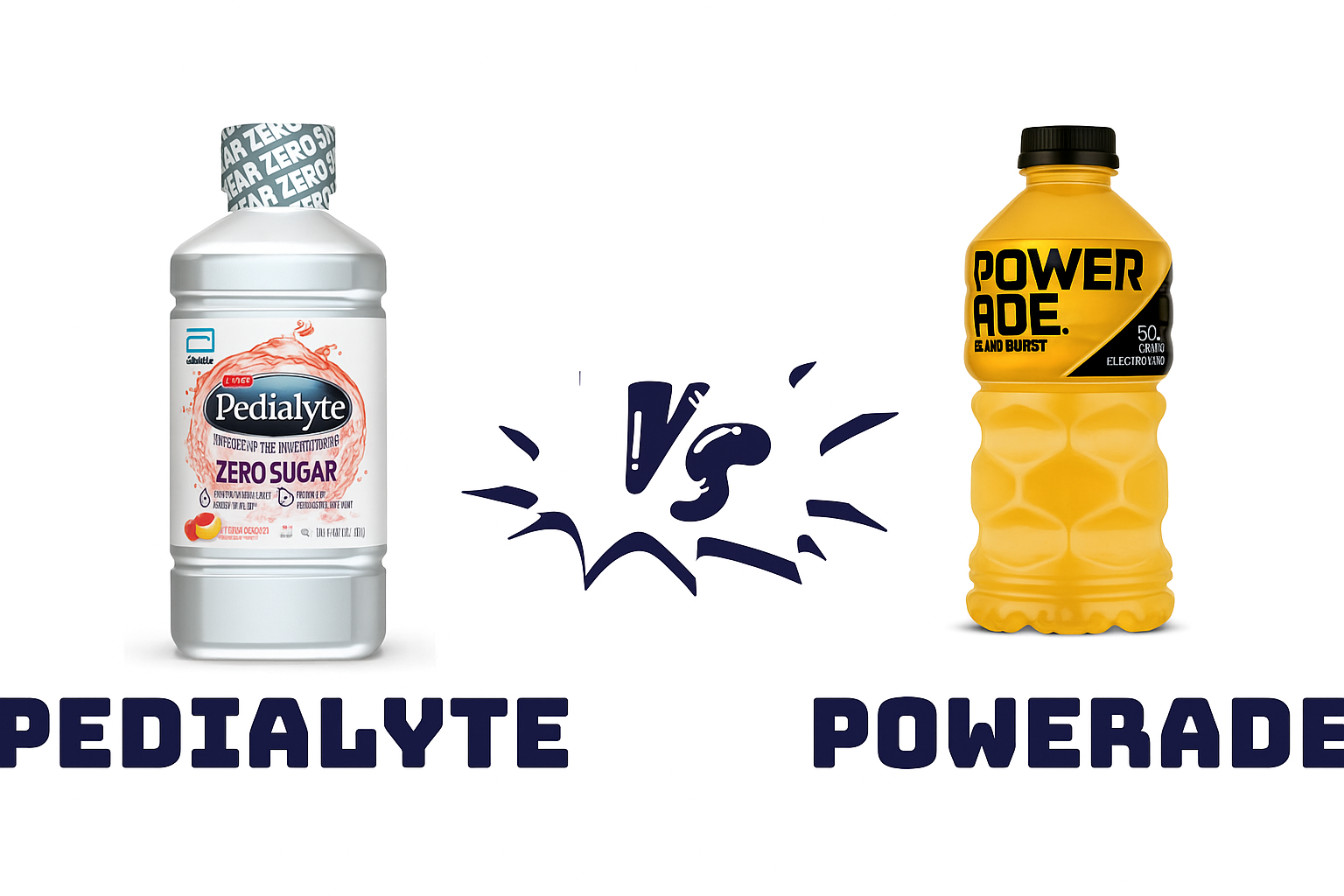
Hydration isn’t one-size-fits-all. Two familiar drink names — Powerade and Pedialyte — are often used interchangeably in conversations about “electrolytes,” but they were designed with different problems in mind. Below is a long, evidence-backed guide that explains what’s inside each drink, the science behind rehydration, when to use which, safety signals, and practical tips you can use (or publish on your blog) with confidence.
TL;DR — fast takeaways
- Powerade = sports drink. Designed for hydration during exercise, it replaces fluid, carbohydrates, and electrolytes lost through sweat. A typical 12 fl oz serving of the original formula contains approximately 80 kcal, 21 g sugar, and a balance of sodium and potassium. Different Powerade lines have varying sugar and electrolyte content.
- Pedialyte = oral rehydration solution (ORS). Formulated for medically managing rehydration from illness or heat-related dehydration, it has a precise, WHO-recommended ratio of electrolytes and glucose for maximum water absorption. For example, Pedialyte Classic provides 1,080 mg sodium and 13 g sugar per liter, while Pedialyte Sport is higher in sodium for significant sweat loss.
- Why it matters: ORS (Pedialyte-style) is designed to maximize water absorption via the SGLT1 glucose-sodium co-transport mechanism in the small intestine, a key principle of oral rehydration therapy. Sports drinks, in contrast, prioritize palatability and energy (carbohydrates) for exercise. Major health bodies like the WHO recommend ORS formulations for clinical dehydration.
Quick nutrition snapshot (typical servings)
| Product (typical serving) | Calories | Sugar | Sodium | Potassium | Intended Use |
|---|---|---|---|---|---|
| Powerade (12 fl oz / 355 mL) | ~80 kcal | ~21 g | ~150 mg | ~35 mg | Sports hydration (carbs + electrolytes). |
| Pedialyte Classic (1 L / 33.8 fl oz) | ~70 kcal | ~13 g | ~1,080 mg | ~780 mg | Medical rehydration for illness/dehydration. |
| Pedialyte Sport (1 L) | <100 kcal | ≤14 g | ~1,380 mg | ~500 mg | Higher-sodium ORS for heavy sweat losses. |
Note: Nutrition information can vary by flavor and formulation. Always check the product label for the most accurate data.
What’s in them (and why it matters)
Powerade (optimized for exercise)
- Main components: Water, carbohydrate (often high-fructose corn syrup in regular versions), electrolytes like sodium and potassium, flavoring, and added vitamins.
- Purpose: The carbohydrates provide immediate fuel for exercising muscles and support performance during prolonged activity. The electrolytes help replenish what’s lost in sweat.
Pedialyte (optimized for medical rehydration)
- Main components: Water, dextrose (glucose), and balanced amounts of sodium and potassium salts, along with chloride and citrate.
- Purpose: The formula is designed for efficient fluid absorption during dehydration caused by vomiting, diarrhea, or heat illness. It uses a precise glucose–sodium ratio rather than providing high calories. Pedialyte Sport increases sodium for heavier sweat loss.
The science in plain English: ORS vs sports drink
- Glucose-sodium co-transport (SGLT1): The small intestine uses a specific protein, SGLT1, to absorb glucose and sodium together. Water then follows by osmosis. ORS formulas, like Pedialyte, are scientifically balanced to exploit this mechanism, maximizing fluid uptake even during rapid fluid loss.
- Osmolarity matters: Global health authorities like the WHO recommend reduced-osmolarity ORS formulations (with lower glucose and sodium than older versions) for treating diarrhea because they are more effective and reduce the need for IV fluids. Pedialyte and similar products adhere to these principles.
- Sports drinks prioritize energy and palatability: Sports drinks provide carbohydrates for energy and electrolytes for performance during extended exercise (typically over 60 minutes). Their formulation is not optimized for clinical rehydration, with a higher sugar and lower sodium concentration compared to ORS.
When to use each — practical scenarios
Use Powerade when:
- You’re exercising for >60 minutes and need onsite carbs + fluid to maintain intensity (e.g., long training sessions, team sports, tournaments).
- You want a flavored beverage that supplies quick energy between events (and calories matter). If you want the electrolyte part without sugar calories, use Powerade Zero (artificial sweeteners).
Use Pedialyte when:
- You (or a child) have vomiting, diarrhea, fever, or other causes of clinical dehydration — i.e., situations that require efficient rehydration rather than energy replacement.
- You’re a heavy/salty sweater post-event and need to restore sodium more aggressively — Pedialyte Sport exists for this purpose because it supplies far more sodium per liter than most sports drinks.
Pediatric & safety notes (important)
- Kids with vomiting/diarrhea: ORS like Pedialyte is the recommended first-line fluid in many clinical contexts for children. It reduces stool volume and the need for IV rehydration compared with sugary drinks. Avoid giving full-strength fruit juices and sodas for diarrheal dehydration. For infants under 12 months, always check with a pediatrician first.
- People on sodium-restricted diets: Pedialyte (especially Sport) contains high sodium and is not appropriate for those with strict sodium limits (congestive heart failure, certain kidney conditions).
- Blood sugar / diabetes: Sports drinks are high in sugar — people managing blood glucose should avoid regular sports drinks. Pedialyte is lower in sugar but still contains dextrose; check product labels.
Evidence: does Pedialyte actually rehydrate better than sports drinks?
- Multiple reviews and health authorities conclude that ORS formulations are more effective than typical sugary drinks for treating dehydration due to vomiting/diarrhea, especially in children, and that ORS reduces need for IV therapy and stool output compared with older formulas. Sports drinks can help rehydrate during and after exercise, but they are not a substitute for ORS in clinical dehydration.
Practical dosing & rehydration strategy (general, not medical advice)
- Mild dehydration (often): Health bodies suggest oral rehydration with a fluid containing 50–90 mEq/L sodium for mild dehydration; dosing (volume) depends on age/weight — follow product directions and clinical guidance. For children with diarrhea/vomiting, small frequent sips are often recommended and reassess in 2–4 hours. Adults can replace based on thirst and urine output; severe cases need medical care.
- After long/hard exercise: A combination of water + a sports drink during long efforts, and if you remain salt-depleted or cramp frequently, consider a targeted product with higher sodium (or Pedialyte Sport) after the event.
Taste, cost & availability
- Taste: Powerade is sweet and usually easier to drink during exercise; Pedialyte is less sweet and can taste “salty.”
- Cost & packaging: Powerade is often sold in smaller bottles/cans and is cheaper per ounce; Pedialyte is commonly sold in 1-L bottles and powder packets. Pedialyte’s pricing is higher because it’s positioned as a therapeutic ORS.
Quick decision flow (use this as a blog callout)
- Sick with vomiting/diarrhea, child with dehydration signs, or severe heat-stroke risk: Pedialyte (ORS).
- Training/competition, need carbs during exercise, want palatable drink: Powerade (or similar sports drink).
- Heavy, salty sweat after very long efforts: Pedialyte Sport or another high-sodium rehydration option.
Myths & FAQs (short)
Q: Is Pedialyte just for kids?
A: No — Pedialyte is for anyone who needs efficient rehydration, including adults. It’s commonly used by athletes, travelers, and people recovering from illness.
Q: Can I replace water with sports drinks all day?
A: Not recommended — unnecessary calories and sugar add up. For daily hydration, water + a balanced diet is best; reserve sports drinks for long/intense exercise.
Q: Are homemade solutions OK?
A: For adults, carefully made home ORS can work, but for children it’s safer to use commercial ORS products or follow public health instructions precisely. WHO and CDC provide recipes and cautions.
Bottom line
Powerade and Pedialyte both help you replace fluids and electrolytes — but they answer two different questions. Powerade is a performance-oriented sports drink (carbs + electrolytes). Pedialyte is a medically informed oral rehydration solution built to restore fluid balance efficiently when dehydration is present (illness, severe heat, or heavy salt loss). Use the product that matches your situation, check labels, and consult a clinician for medical or pediatric concerns.

Hey, I’m Som — the person behind MyBeverages.xyz. I started this blog because I’m always curious about what’s really in the drinks we enjoy every day. Whether it’s comparing energy drinks, breaking down ingredients, or just sharing cool new finds, I try to keep things simple, honest, and useful. If you’re into beverages like I am, you’re in the right place. Thanks for stopping by!