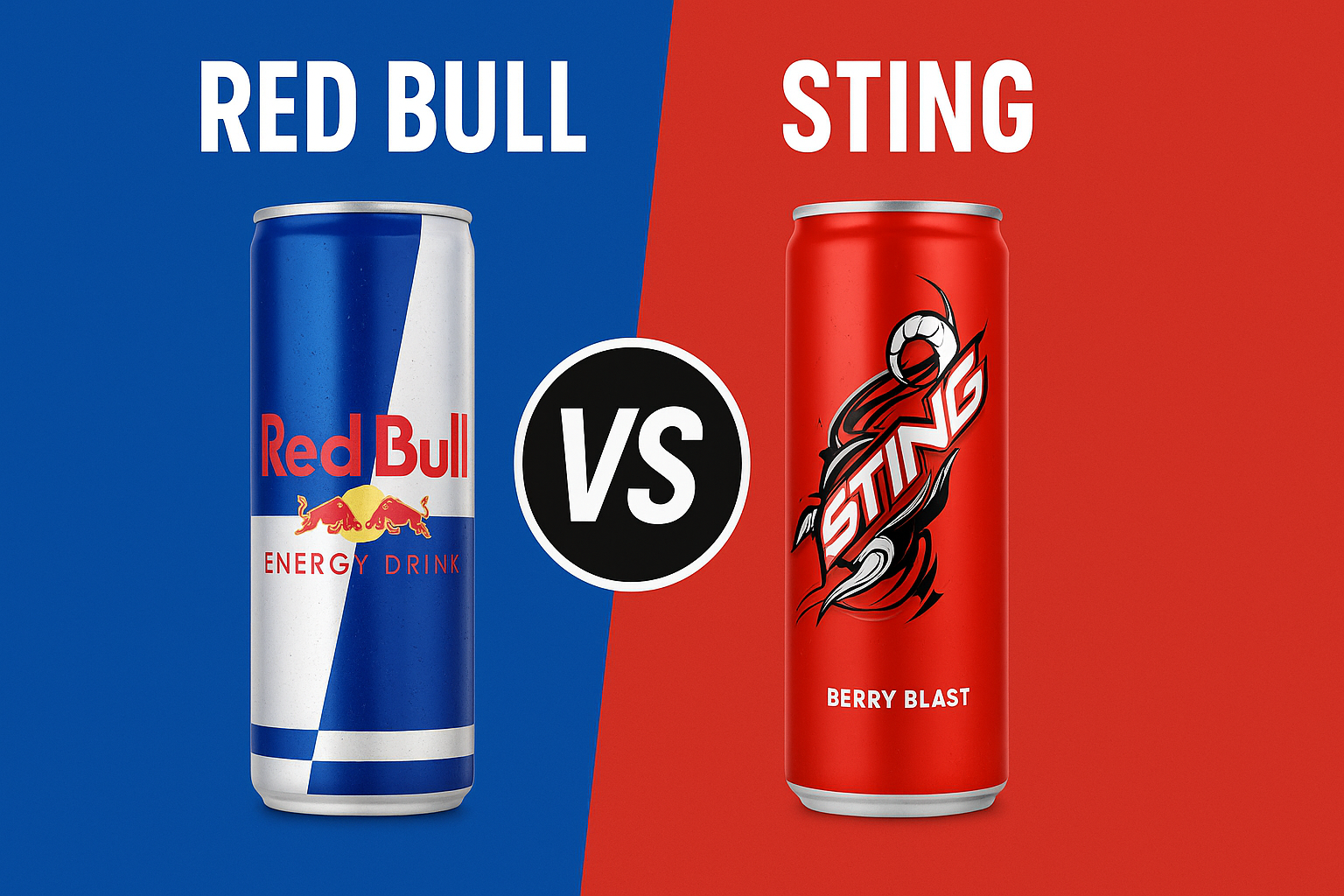
When it comes to energy drinks, few names are as globally recognized as Red Bull. But in recent years, Sting, a fast-rising brand under PepsiCo, has been making waves in Asia and beyond. Both promise a quick energy boost, but they differ in history, nutrition, taste, and branding. If you’ve ever wondered which one is right for you, here’s a deep dive into Red Bull vs Sting.
A Quick Snapshot
- Red Bull: Austrian origin, the pioneer of modern energy drinks, with a consistent formula — around 80 mg of caffeine per 250 ml can.
- Sting: A PepsiCo brand, marketed heavily in Asia and Africa, with sweet, fruity flavors and caffeine levels that vary depending on the market.
The Origins: How They Started
Red Bull was born in Austria in the 1980s and quickly became a global icon. Its strategy was simple: dominate the extreme sports scene, sponsor high-energy events, and make “Red Bull gives you wings” one of the most memorable slogans worldwide.
Sting, on the other hand, launched in the 2000s and carved out space in emerging markets with affordable pricing and bold flavors. PepsiCo has since elevated Sting, even signing a 2025 Formula 1 partnership, putting it on the global stage alongside big names like Gatorade.
Ingredients & Nutrition: What’s Inside?
Red Bull
- Caffeine: ~80 mg per 250 ml can (similar to a small coffee).
- Other ingredients: taurine, B vitamins (niacin, B6, B12), and sugars (or zero-sugar in the “Sugarfree” and “Zero” versions).
- Calories & sugar: Original Red Bull (250 ml) typically has around 110 calories and 27 g sugar.
Sting
- Caffeine: Varies by country and flavor — check the can, as local formulations differ.
- Other ingredients: carbonated water, sugar, taurine, caffeine, B vitamins, and sometimes ginseng extract.
- Calories & sugar: Around 70–80 calories per 250 ml and ~17–20 g sugar, depending on the variant.
👉 Key takeaway: Red Bull’s caffeine is consistent worldwide at 80 mg per 250 ml. Sting’s caffeine can differ, so always check the local label.
Flavor & Availability
- Red Bull: Known for its classic flavor (slightly medicinal, not too sweet), plus sugar-free and flavored versions like Tropical, Watermelon, and Peach. Found almost everywhere — from supermarkets and cafés to airports.
- Sting: Typically sweeter and fruitier, with flavors like Gold Rush, Berry Blast, and Blue Thunder. Popular in countries like the Philippines, Pakistan, Vietnam, and parts of Africa. Availability outside Asia is expanding under PepsiCo.
Marketing & Branding
- Red Bull: Built an empire around lifestyle branding. From owning a Formula 1 team (Red Bull Racing) to sponsoring extreme sports and music festivals, Red Bull is less about the drink and more about the experience.
- Sting: PepsiCo has positioned Sting as bold, youthful, and accessible. Its new Formula 1 partnership signals that PepsiCo is ready to push Sting as a global competitor, not just a regional brand.
Health Considerations
- Caffeine: Both are safe in moderation for healthy adults, but avoid excess intake. Red Bull’s 80 mg per 250 ml is easy to track; Sting’s variability makes label-checking important.
- Sugar: Both contain significant amounts of sugar unless you choose a sugar-free option. Too much added sugar can lead to weight gain and other health risks.
- For kids, pregnant women, or sensitive individuals: Energy drinks are not recommended.
Price & Value
- Red Bull: Usually sold at a premium price, reflecting its global brand status.
- Sting: Generally more affordable, especially in markets where it’s produced locally.
Which Should You Choose?
- For a reliable caffeine boost: Go with Red Bull — the formula is consistent, and it’s available almost everywhere.
- For a sweeter, fruit-flavored energy drink: Try Sting — it offers more flavor variety and often at a lower price.
- For sugar-conscious drinkers: Red Bull offers clear sugar-free options, while Sting’s low-sugar choices may vary by region.
Final Verdict
Both Red Bull and Sting deliver on energy, but they target different audiences. Red Bull is all about consistency, premium branding, and global presence. Sting is PepsiCo’s challenger — sweeter, more affordable, and aggressively expanding into sports sponsorships.
If you want a tried-and-true energy drink, Red Bull is your best bet. But if you’re curious to try something fruity, bold, and often cheaper, Sting might surprise you.
At the end of the day, the “winner” depends on your taste preference, caffeine tolerance, and budget.

Hey, I’m Som — the person behind MyBeverages.xyz. I started this blog because I’m always curious about what’s really in the drinks we enjoy every day. Whether it’s comparing energy drinks, breaking down ingredients, or just sharing cool new finds, I try to keep things simple, honest, and useful. If you’re into beverages like I am, you’re in the right place. Thanks for stopping by!